Venture
Rewarding local discovery through challenges, experiences, and community engagement.
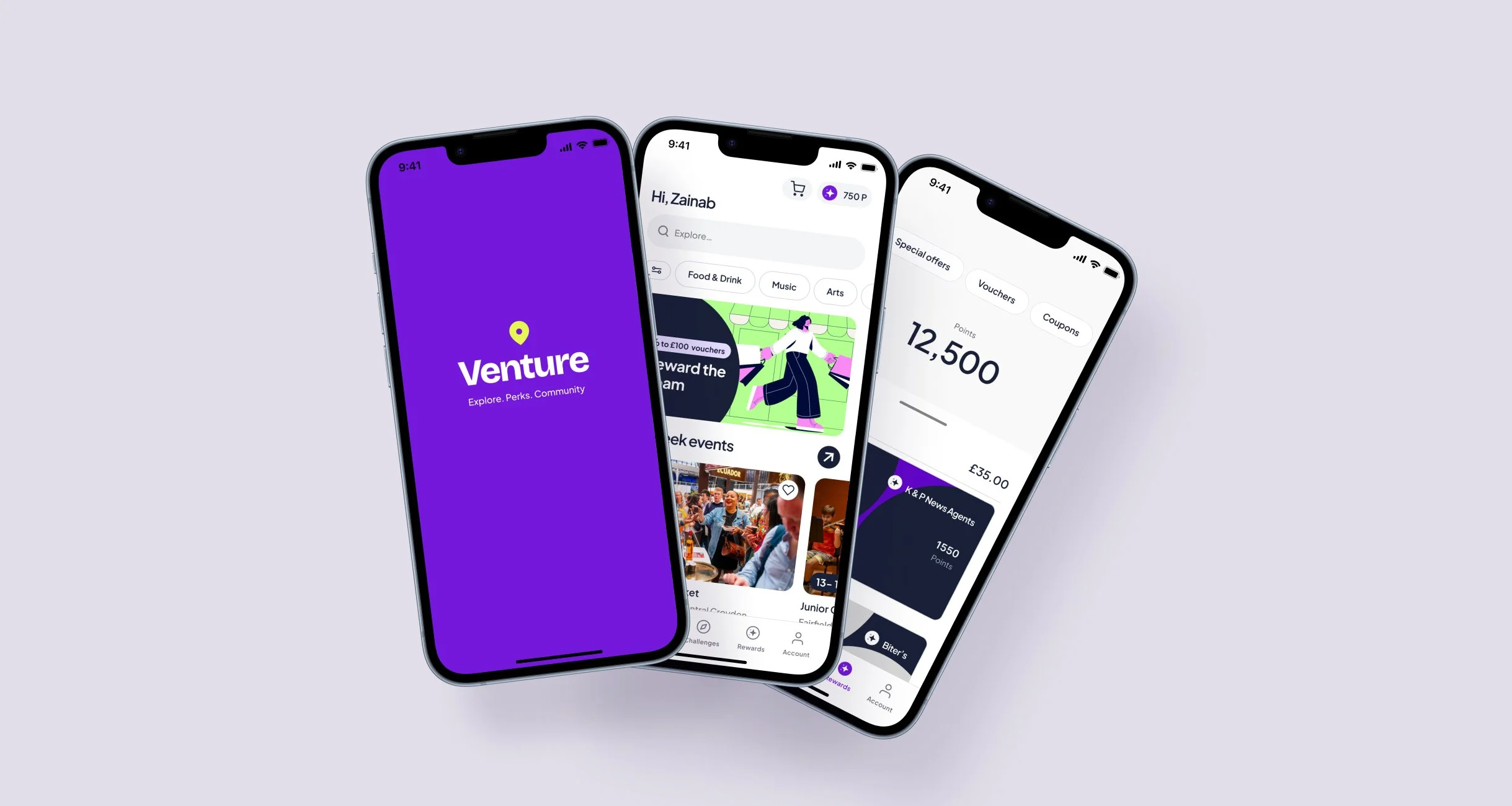
Venture is a mobile-first platform designed to help residents discover local businesses, events, and activities through challenge-based exploration. By combining rewards, bookings, and community participation, Venture encourages people to engage more deeply with their local area while helping independent businesses increase visibility.
Snapshot
Role: Product Designer
Duration: 12 weeks
Responsibilities: Research, UX Design, User Flows, Wireframing, UI Design, Prototyping, User Testing
Tools: Figma, FigJam, ChatGPT, Adobe Photoshop
Problem
Residents often default to familiar places and online services, making it harder for local businesses and community activities to stay visible.
As a result, many independent businesses struggle to attract attention while residents miss opportunities available within their own neighbourhood.
The challenge was to design an experience that encourages people to explore their neighbourhood and discover opportunities they might otherwise miss.
Context
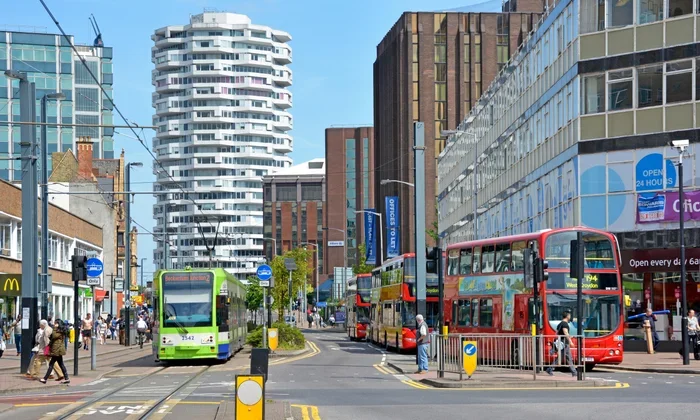
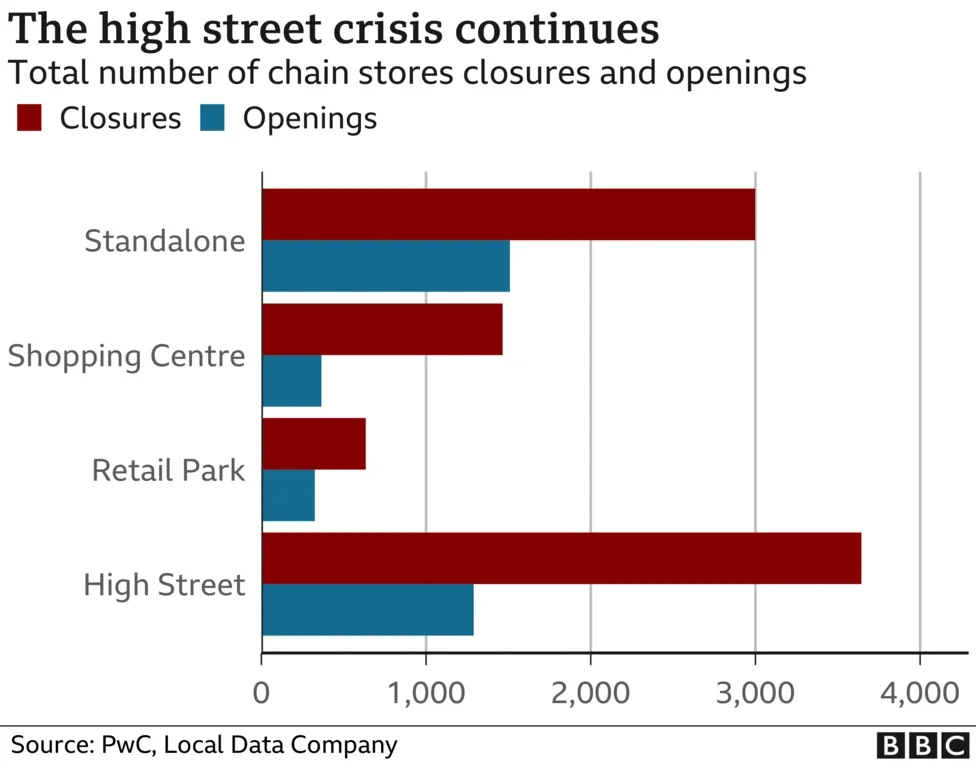
Croydon is home to more than 390,000 residents and has a diverse mix of businesses, community organisations, and cultural activities. Despite this, local high streets continue to face challenges due to changing consumer habits, rising living costs, and increased reliance on online shopping.
Research highlighted several contributing factors:
People are spending more cautiously.
Many residents have noticed local shops disappearing.
Online services are often preferred over local alternatives.
Community activities can be difficult to discover unless users actively search for them.
These challenges created an opportunity to rethink how residents engage with their local area.
Initial exploration
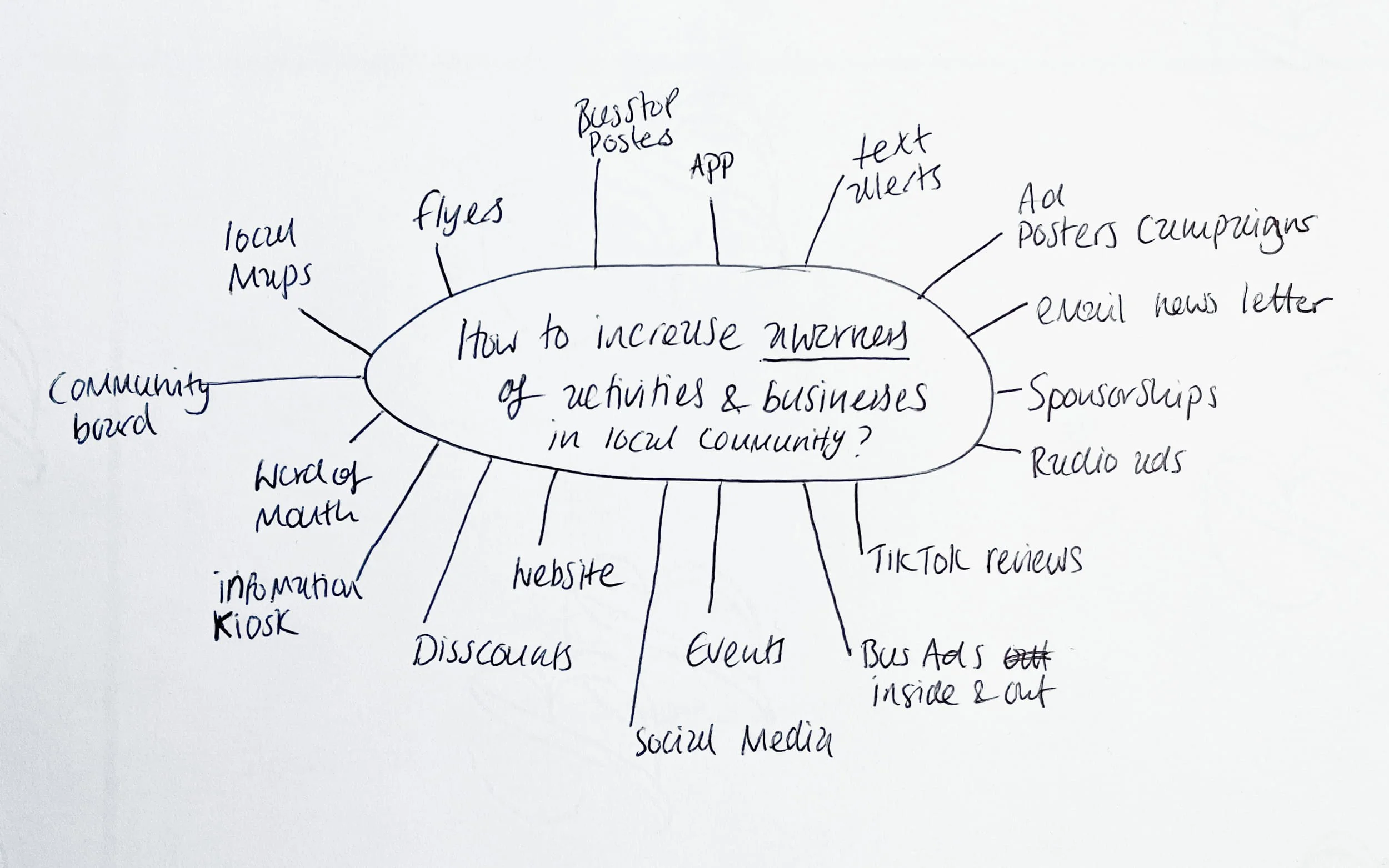
My first concept focused on a network of interactive kiosks positioned throughout the town centre.
The kiosks would display local promotions, nearby activities, and directions to businesses and events. Before developing the concept further, I wanted to validate whether physical touch-points were the best way to encourage local discovery.
Early sketches helped me explore different approaches and assess how scalable each solution might be.
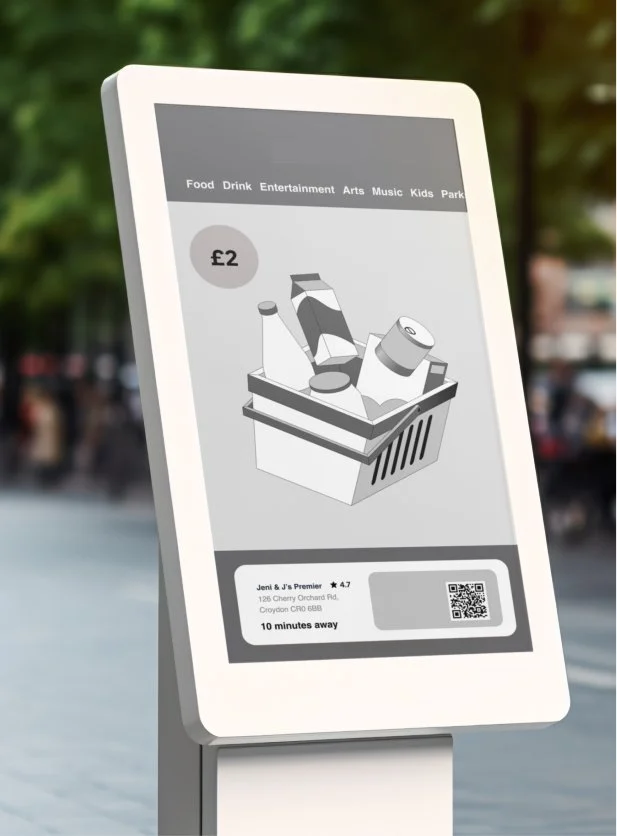
Setting up interactive kiosks throughout the town and high streets could showcase local business promotions, nearby activities, and provide directions.
Research
Research goals
To better understand the problem space, I defined three research goals:
How do residents currently discover local businesses and activities?
What motivates people to try new places?
What prevents residents from engaging with their local community?
The intention was to uncover both user needs and business opportunities before moving into solution design.
Methods
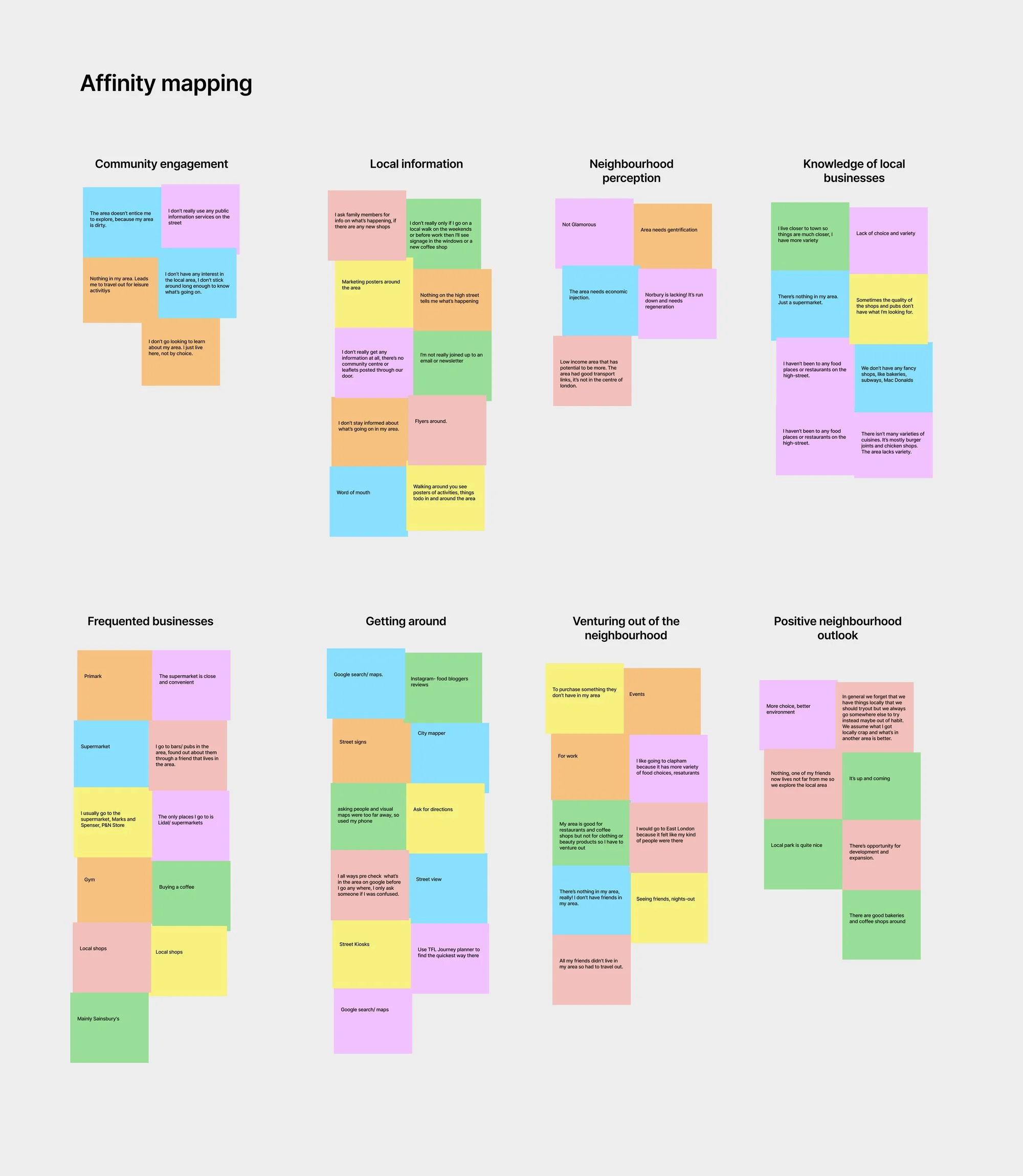
User interviews
Secondary research into local economic and consumer behaviour trends
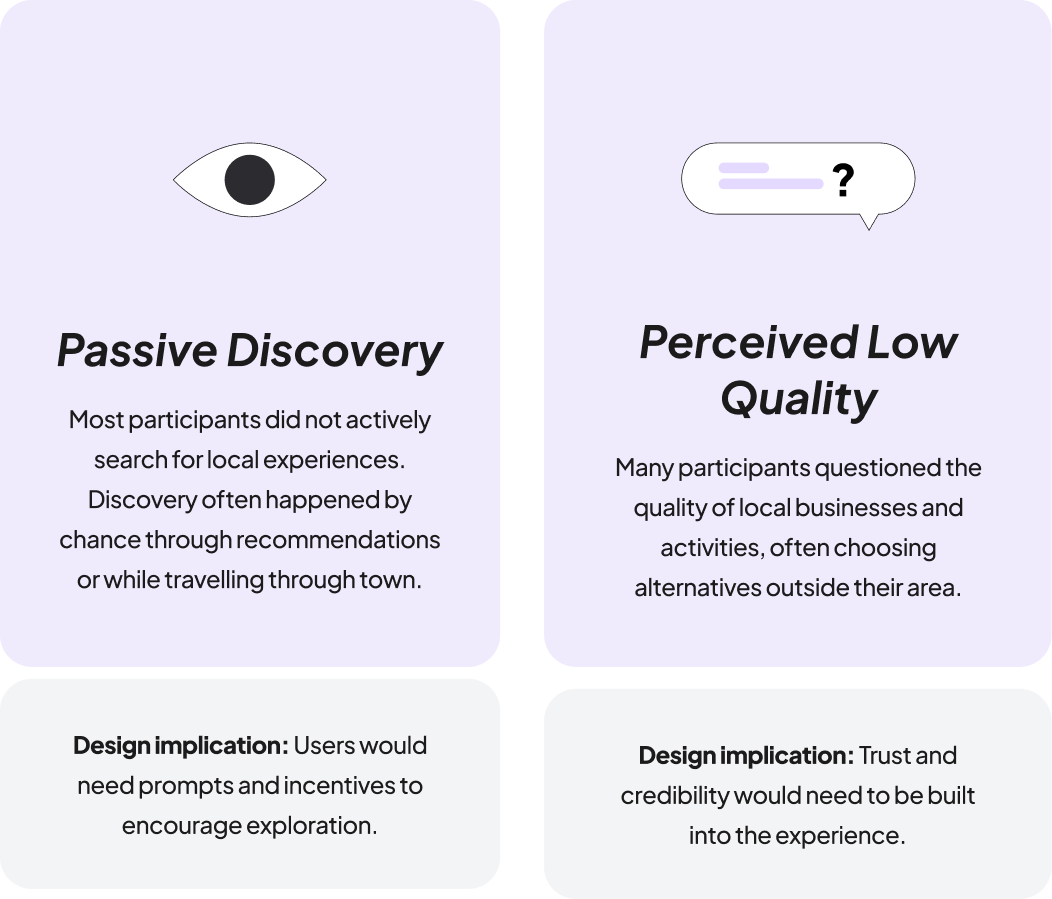
Key Insights
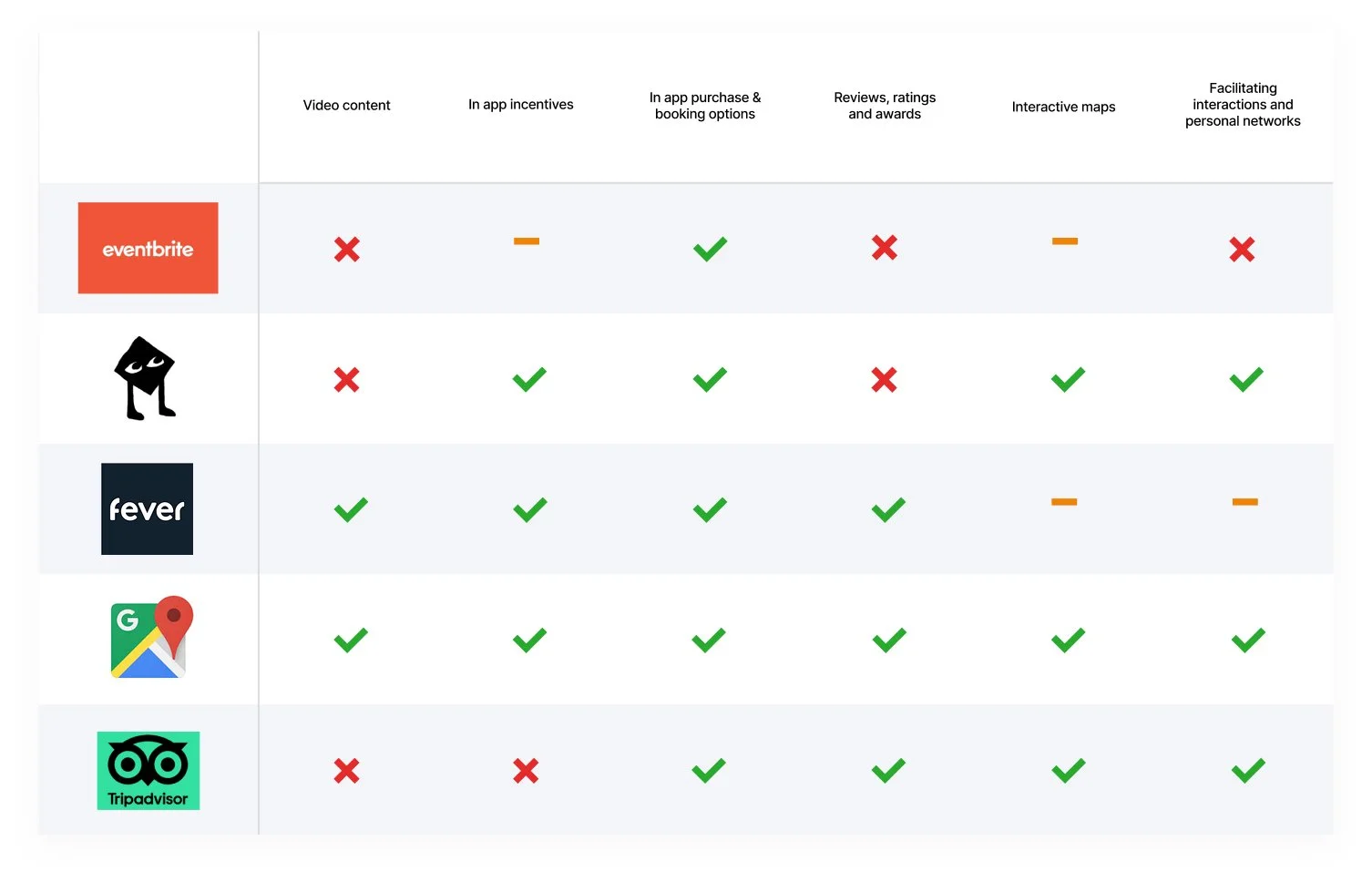
Drawing on insights I examined events and travel guide apps to identify features that promote exploration and build credibility, as well as mapping apps focused on local discovery and travel planning.
Refining the product direction
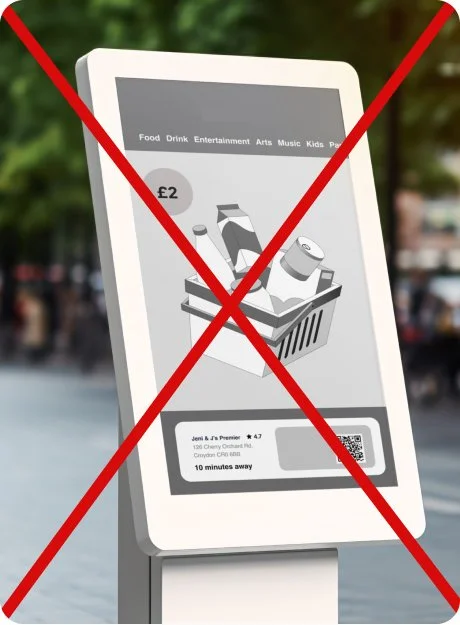
One of the most important outcomes from the research was challenging my initial assumption.
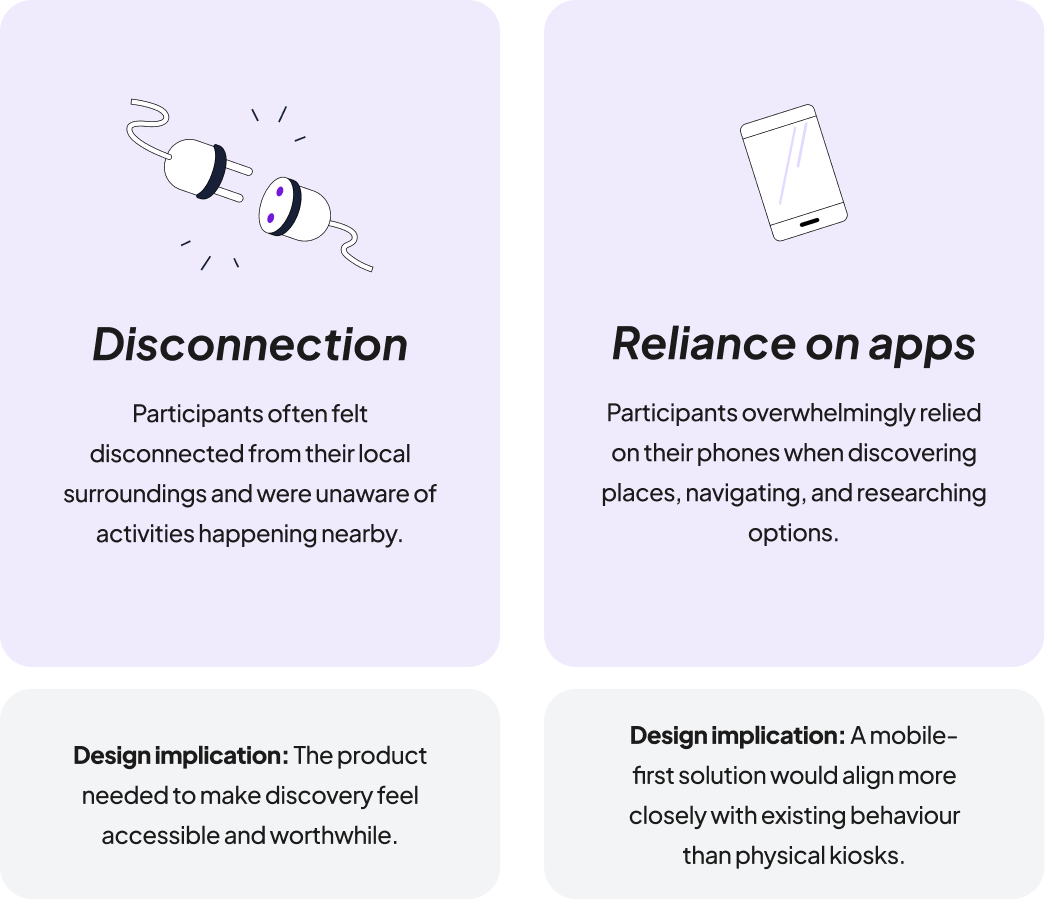
While kiosks appeared to be an interesting solution, users consistently demonstrated a preference for mobile discovery. Kiosks would also introduce challenges around maintenance, accessibility, and scalability.
As a result, I pivoted towards a mobile-first product that could support users wherever they were and fit naturally into their existing habits.
Opportunity
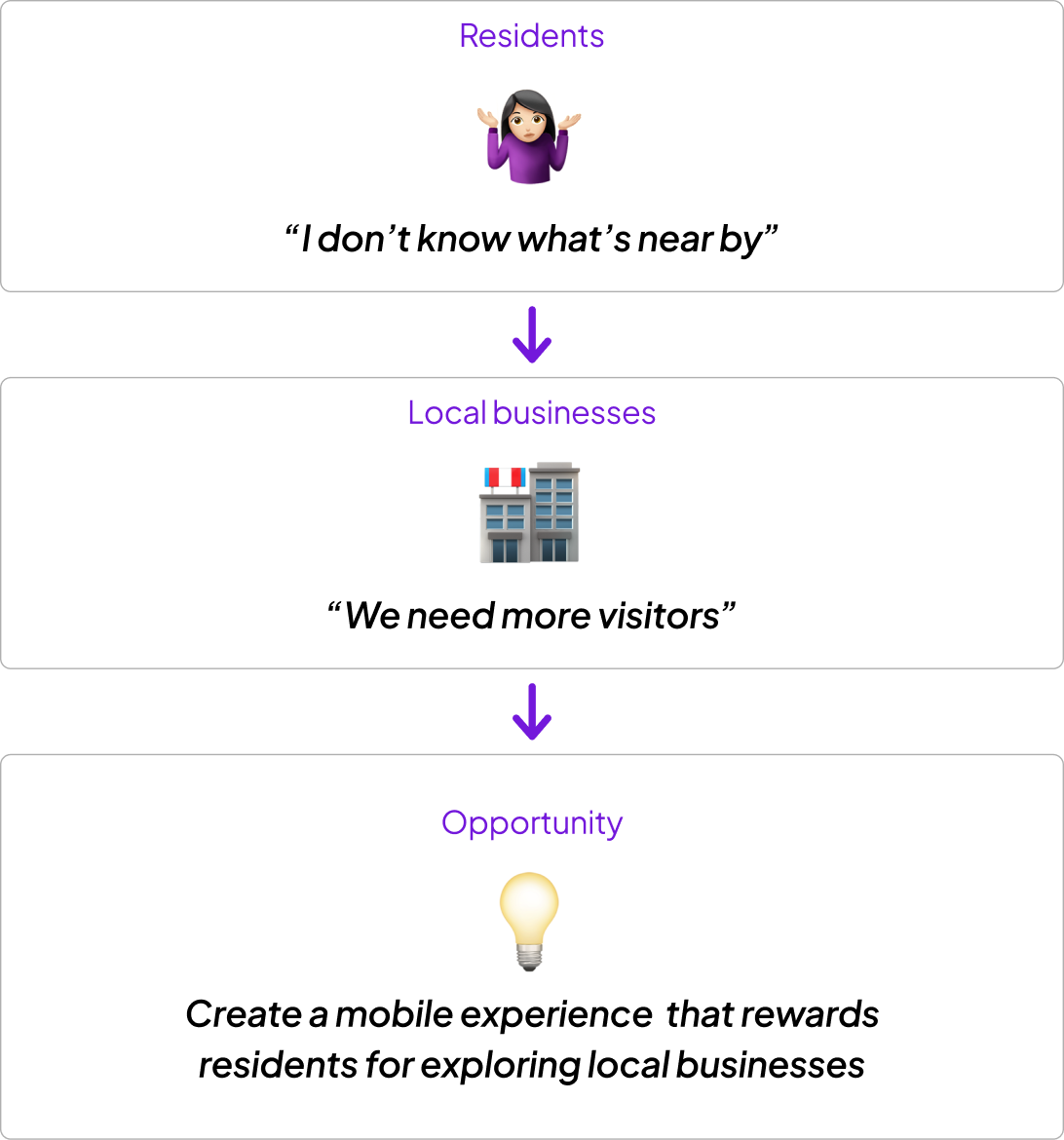
Research revealed that residents weren't actively looking for local businesses they needed a reason to explore. At the same time, independent businesses needed more footfall and visibility. This created an opportunity to connect these needs through a mobile-first experience that rewards exploration while helping local businesses attract new customers.
Defining the audience
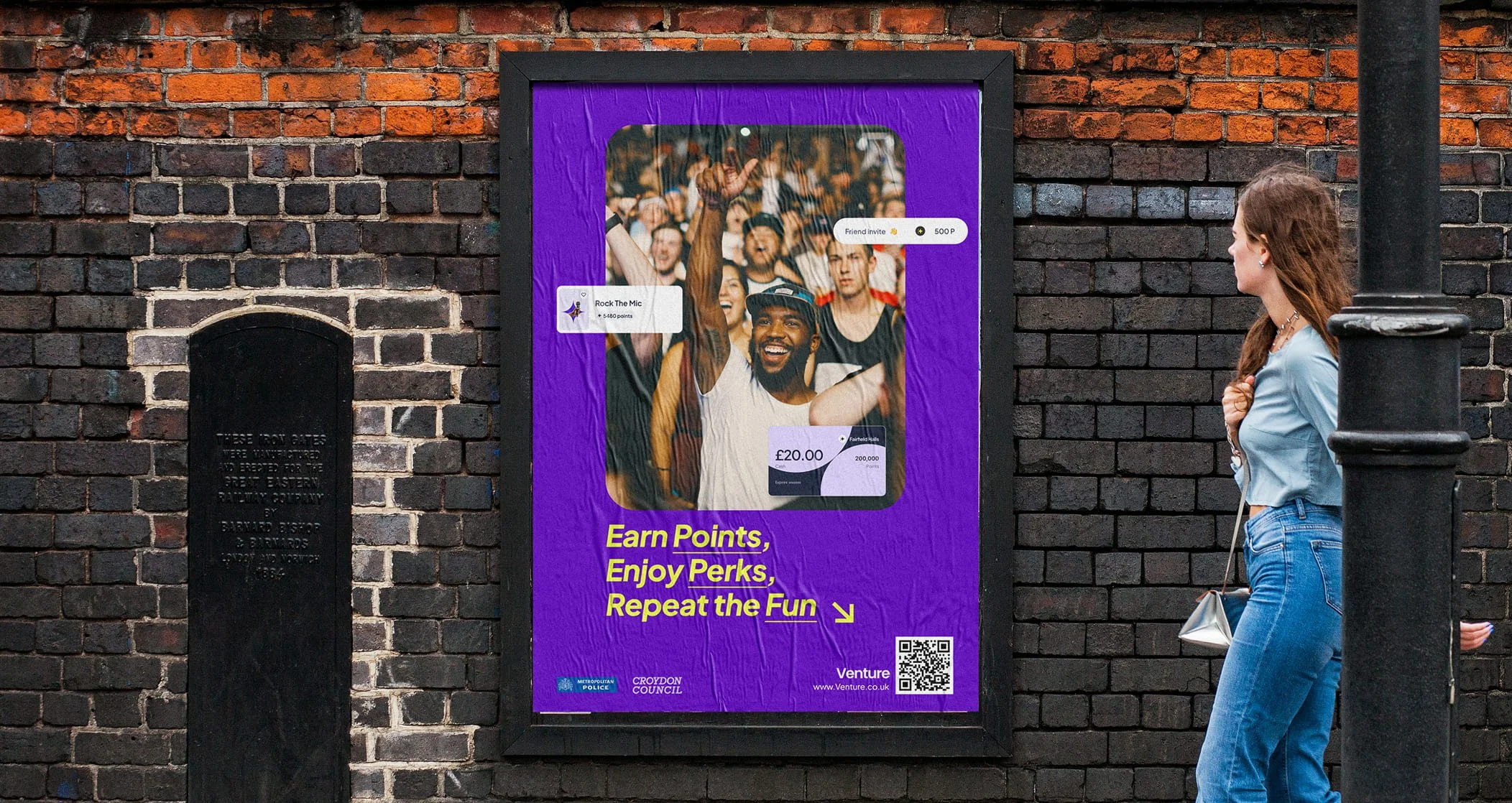
Although the problem affected many residents, designing for everyone would create a broad experience. Combining user research with market trends helped identify young professionals (22–35) as the strongest audience.
They were most likely to:
✓ discover places on their phones
✓ enjoy trying new cafés and restaurants
✓ engage with rewards
✓ explore experiences with friends
User flow
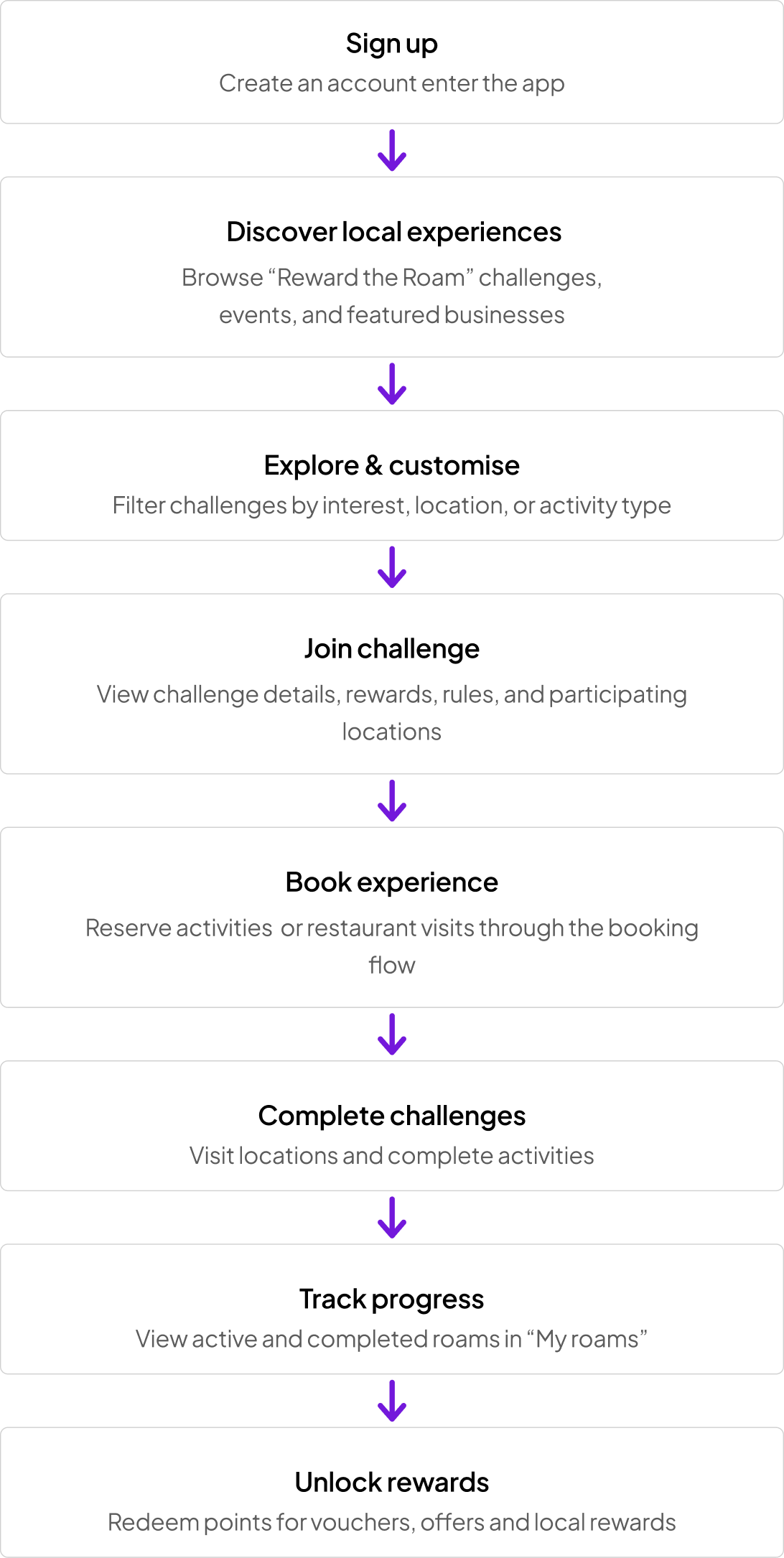
The core experience was designed around a simple journey, this journey formed the foundation for all key product decisions.
Key design decisions
Research showed that users preferred using their phones to discover and navigate local experiences.
I prioritised a mobile-first experience to reduce friction and align with existing behaviours.
Mobile-first discovery

Not all users have the same interests, mobility levels, or availability.
I designed a guided filtering flow that helps users find challenges relevant to their preferences and circumstances.
This makes exploration feel more achievable and personalised.
Personalised challenge filters
Research suggested that residents were not actively looking for new experiences.
To encourage participation, I introduced challenge-based exploration supported by points, progress tracking, and rewards.
This transforms discovery into an activity rather than a passive search experience.
Gamified exploration
Participants frequently questioned the quality of local businesses.
To address this, I incorporated reviews, ratings, badges, and detailed business information to increase confidence and credibility.
Trust through social proof
Testing & iteration
I tested 20 screens with 8 target users to evaluate onboarding and challenge participation.
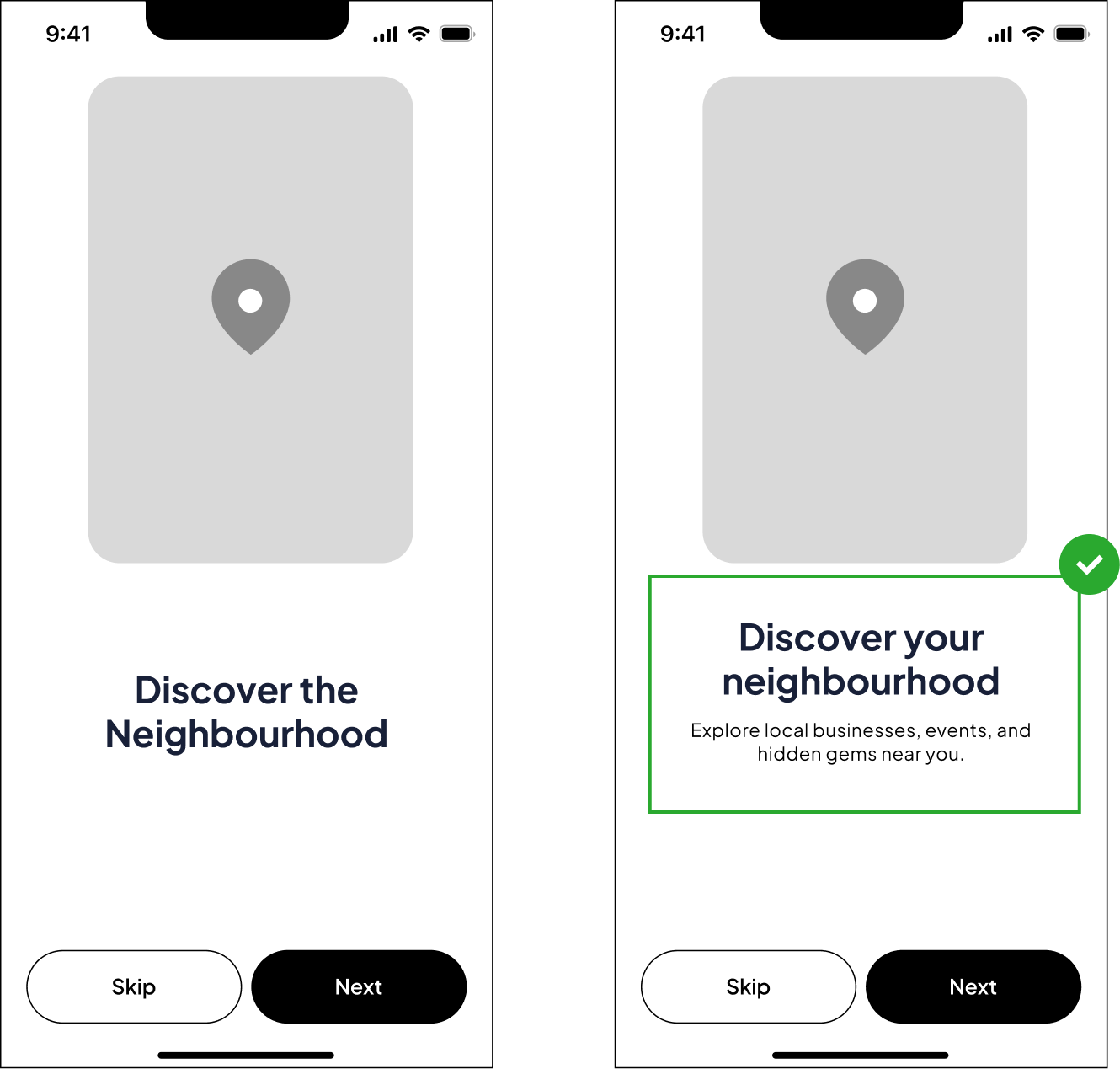
Finding 1
Users felt some onboarding headers lacked context.
Iteration: Improved headings and introduced supporting microcopy to provide clearer guidance.
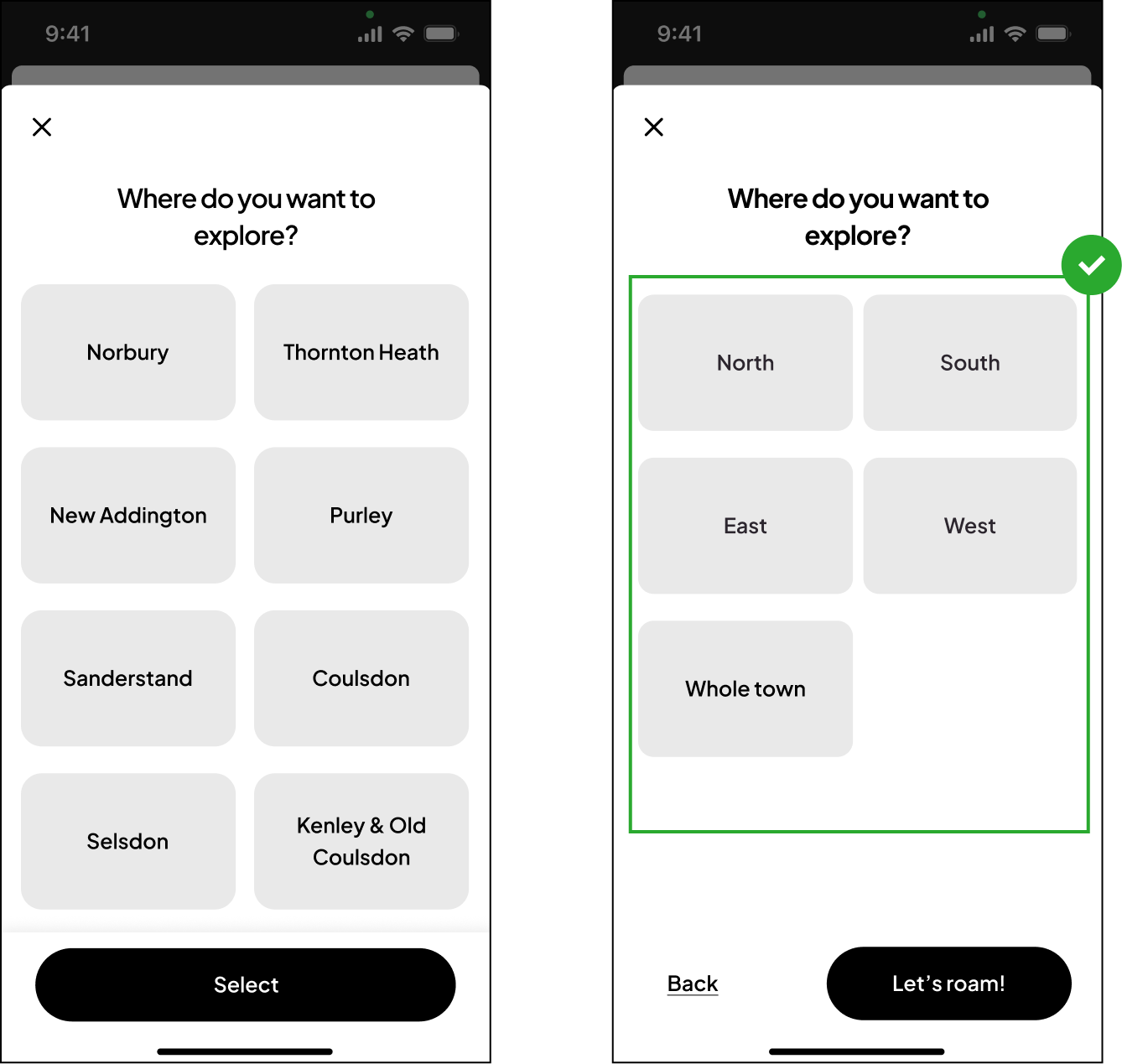
Finding 2
Some users struggled to understand how challenge areas were organised.
Iteration: Grouped areas into clearer zones to simplify navigation.
These changes improved clarity and reduced confusion during onboarding.
Finding 3
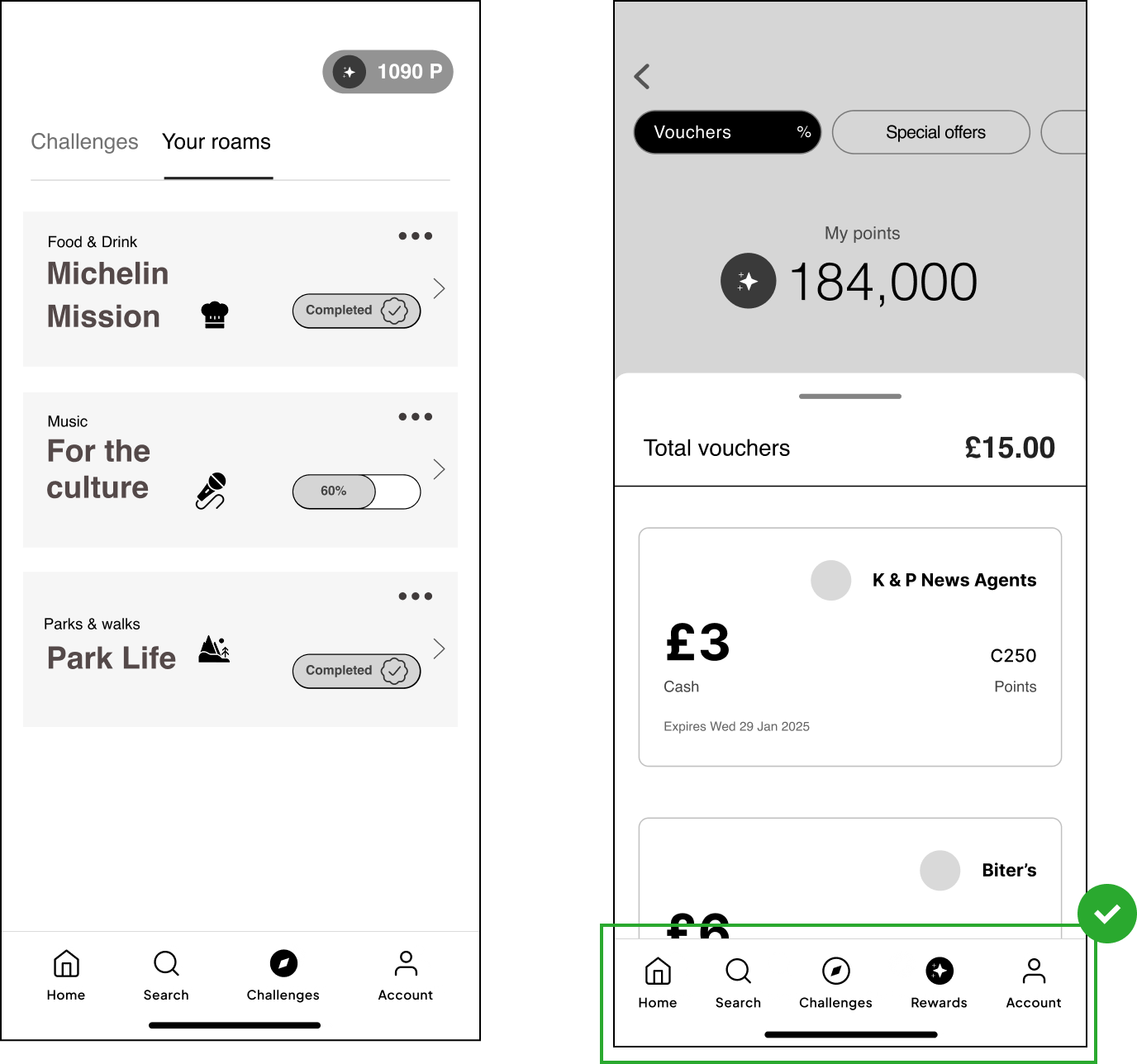
Users struggled to locate their earned rewards after completing a challenge.
Iteration: I added a dedicated Rewards section to the bottom navigation, making vouchers, discounts, and offers easier to find and access.
Final solution
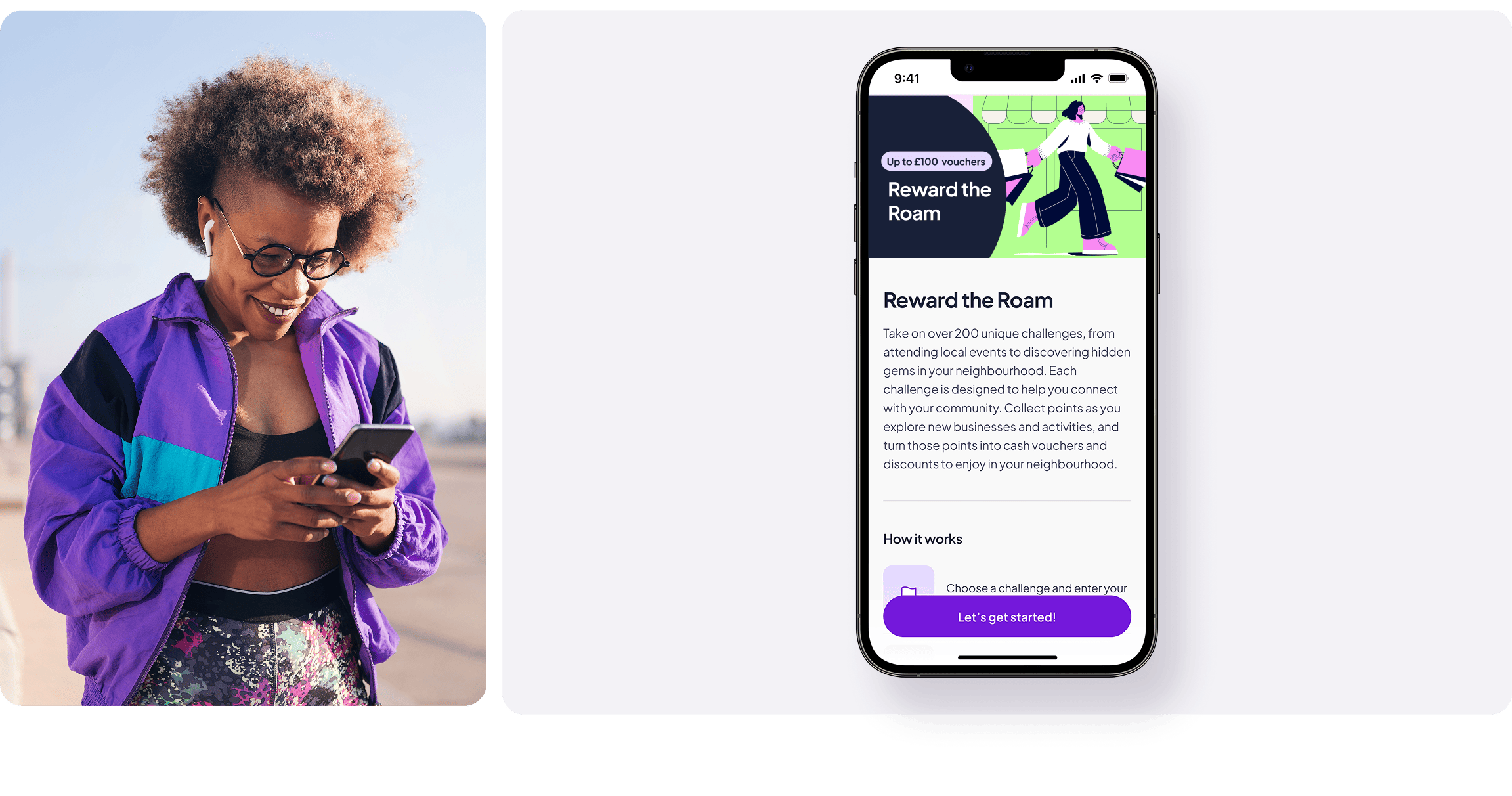
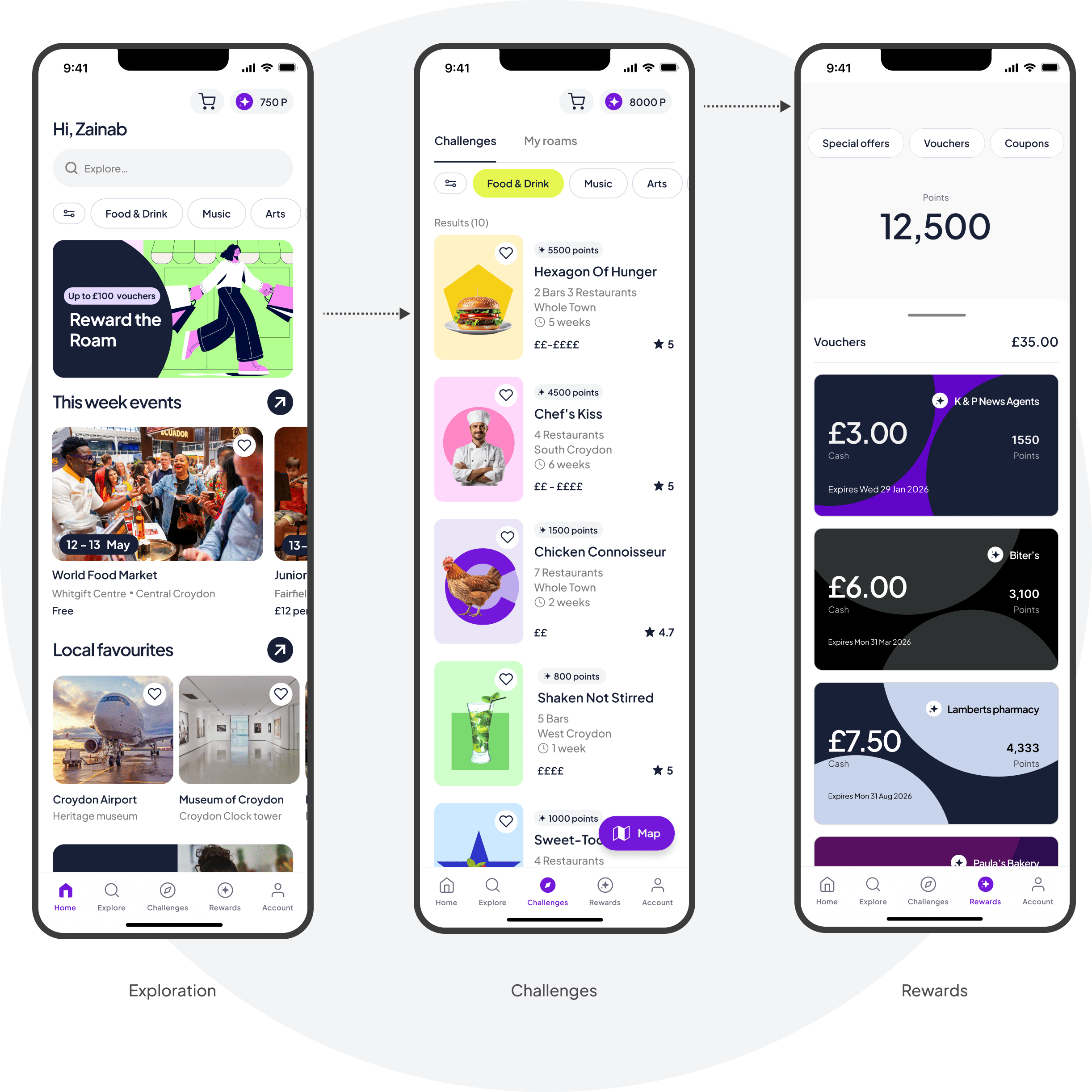
The final product centres around a feature called Reward the Roam.
Users discover local challenges, join experiences, track their progress, and earn rewards for exploring businesses and activities within their community.
The experience combines discovery, participation, and incentives into a single flow that supports both user engagement and local business visibility.
Feature walkthrough
Encouraging local exploration through challenges and rewards.
Discover local challenges
Tap “Reward the Roam” to explore local challenges and customise your filters.
Start your challenge
Browse themed challenges, review the details, and start tracking your progress.
Book instantly
Reserve a table directly in the app to complete bookable challenges.
Track progress and rewards
Track your progress as you complete challenges and unlock points and rewards.
Impact & success measurement
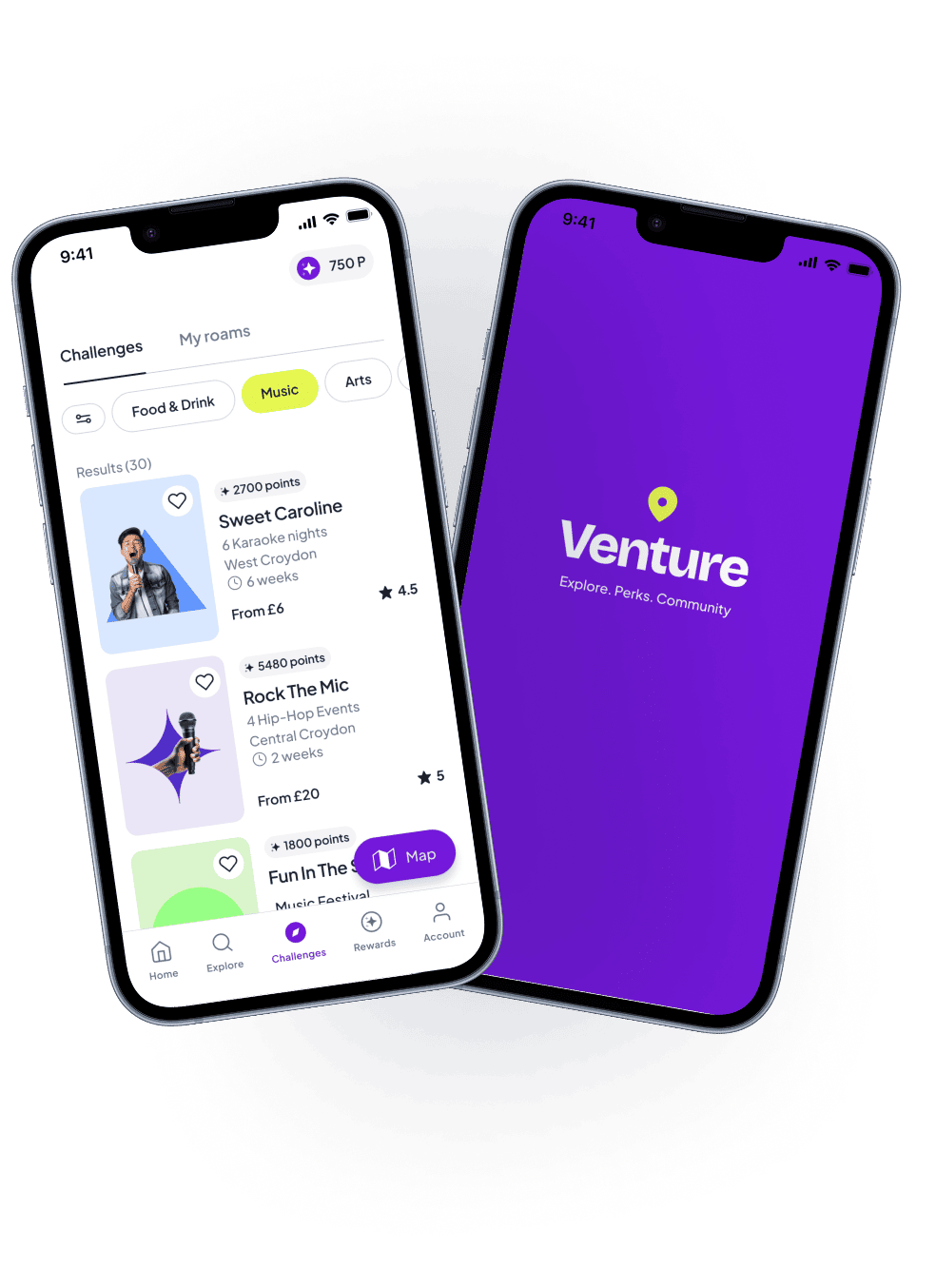
The platform was designed to create long-term engagement between residents and local businesses through community-driven exploration and reward-based interactions.
Increased awareness of local events and independent businesses
Encouraged greater participation in neighbourhood activities
Improved trust and confidence in local recommendations
Created a clearer sense of progress and achievement through challenge completion
User impact
Increased foot traffic to participating businesses
Improved visibility for small and independent businesses
Encouraged local spending through rewards and challenge-based engagement
Strengthened connections between residents and local business owners
Business impact
Success metrics
To evaluate the platform’s effectiveness, I would track:
Challenge Engagement
Challenges started
Challenge completion rate
Participation
Event bookings
Business visits completed
Reward Activity
Points earned
Rewards redeemed
Retention
Weekly active users
Monthly active users
Repeat challenge participation
Business Performance
Featured business engagement
Repeat visits to participating businesses
Reflection
This project taught me that encouraging exploration requires more than simply making information available.
The challenge was creating enough motivation, trust, and clarity for users to actively engage with their local area. Through research, testing, and iteration, I learned how rewards, social proof, and personalised discovery can work together to influence behaviour while creating value for both users and businesses.
Most importantly, the project reinforced the importance of validating assumptions early. What began as a kiosk concept evolved into a mobile-first experience because the research revealed a different user need. That shift ultimately led to a stronger and more scalable solution.